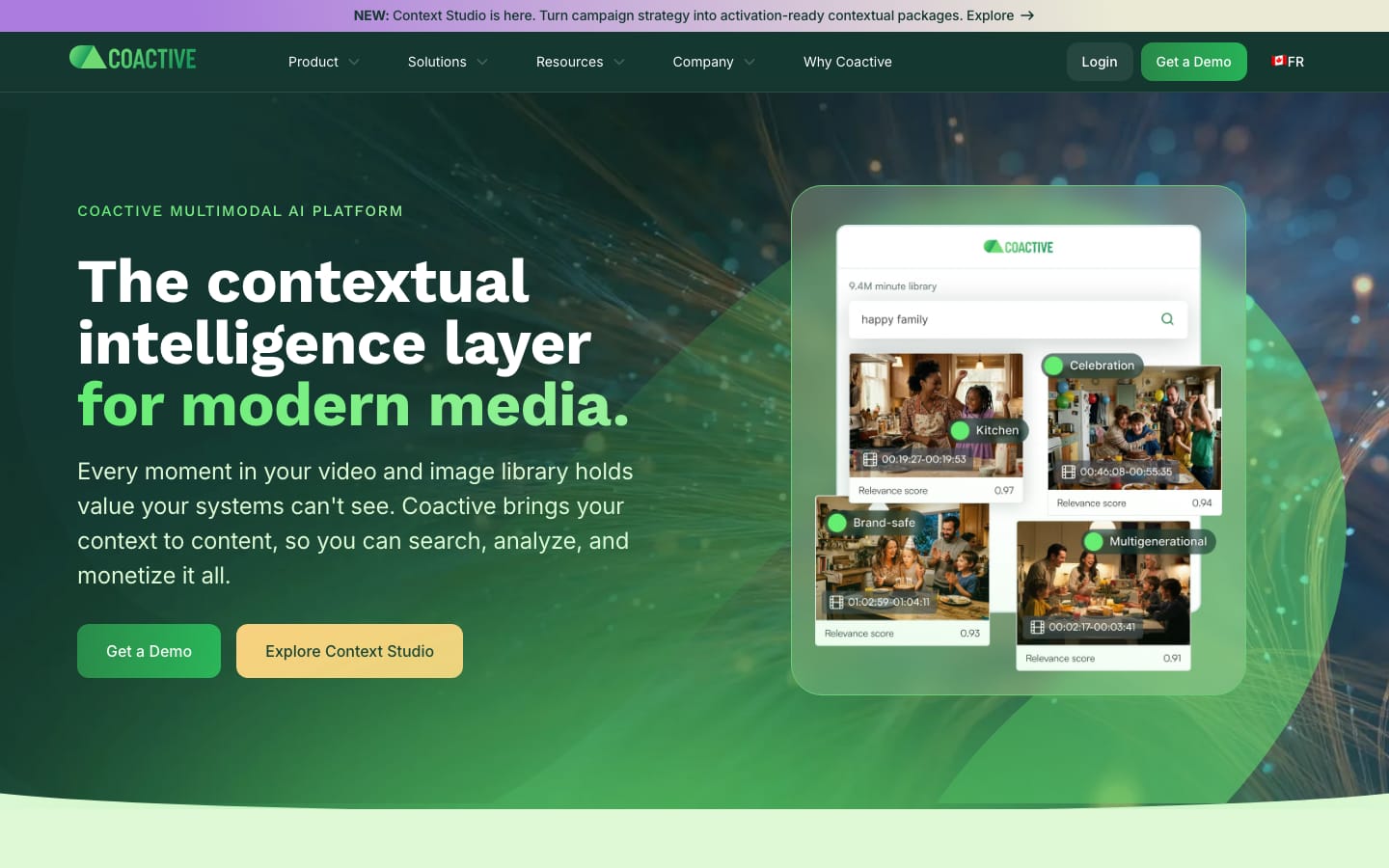
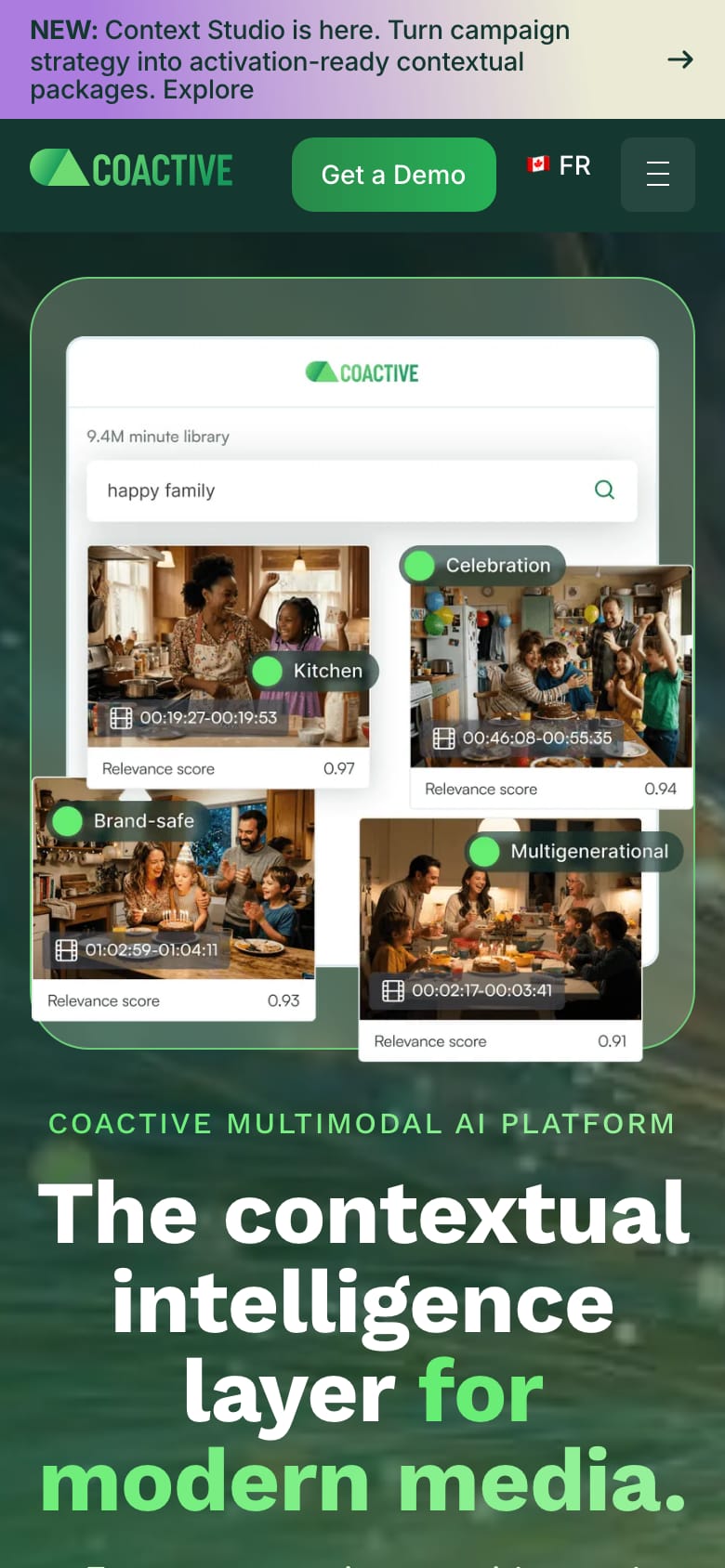
Coactive AI: website
Webflow consulting and supervision for the website of Coactive AI, a multimodal AI / content intelligence platform. The main developer built the site; I defined the scope and implementation order, supervised the build and handled Webflow architecture decisions and quality control.
- Client
- Coactive AI · Acclaim
- Role
- Webflow Expert / Consultant (supervision)
- Team
- Two developers, whose work I supervised
- Timeline
- 2025
- Outcome
- Visitors stayed on the site longer, and that time turned into purchases
Context and business problem
Coactive AI is a multimodal AI / content intelligence platform whose clients include NBC, Thomson Reuters, Fandom and Emplifi. The website had to explain a technical platform and turn visits into sales.
My job was to help Coactive get better results from Webflow: to make sure the build matched the brief, was well structured, and was delivered in the right order and at the right quality.
Users and their goals
- Website visitors: product, data and marketing leads at media and content companies evaluating whether the platform fits their content library; they need to understand the product quickly enough to keep reading and get in touch.
- The client’s team: a site they can grow and manage in Webflow.
- The developers: clear scope, priorities and architecture decisions so they can build without rework.
Constraints
- I was not the main developer: my impact came through scope, decisions, supervision and quality control.
- Design came from Figma; the work was in Webflow implementation, not redesign.
- Distributed, cross-time-zone collaboration, which is why the work mixed live sessions with asynchronous reviews.
My role and responsibilities
- Defining the scope from the client brief
- Setting the implementation order
- Supervising the whole build and other developers’ work
- Ongoing technical advice and Webflow architecture decisions
- Quality control
- Synchronous consulting (live decisions) and asynchronous consulting (brief analysis, planning)
Process and key decisions
This was a consulting and supervision engagement, so the “process” is the delivery process around the build, not a design process.
1. Brief → scope
I translated the client brief into a defined scope of work, so the developers knew exactly what was in and out.
2. Implementation order
I set the order in which the site was built.
Decision: build the shared structure and components first, then the pages.
Why: changes land in one place instead of being repeated page by page.
3. Architecture decisions
I made the Webflow architecture calls during the build. The architecture decisions that mattered most: the component system and the interactions.
4. Supervision and quality control
I reviewed the developers’ work and kept quality consistent against the Figma source and the brief.
5. Sync + async
Live sessions for decisions that needed a conversation; async for brief analysis and planning.
Where AI fits
I used AI to speed up reviewing the brief and preparing QA checklists; every finding was checked by me in Webflow before it went to the developers.
Solution
A live Webflow website, coactive.ai.
Outcome and impact
Webflow improvements that kept visitors on the site longer, and that time turned into purchases.
What I learned and what’s next
- Supervising other developers taught me that the biggest quality lever is the order of work and clear decisions up front, not fixes at the end.
- Next time I would agree on the success measures (e.g. time on site, demo requests) with the client at kickoff, so the impact can be reported with numbers.